

Part 2: Protecting the Value Your Practice Is Building
A busy dental practice is not necessarily an efficient one. That was the inspiration for Stop the Financial Bleeding: Sealing the Hidden Inefficiencies in Your Practice Profitability, an expert panel discussion hosted by CDSPI at dental conferences across Canada this year. This two-part article draws on insights from the sessions held at the Pacific Dental Conference and the Ontario Dental Association’s Annual Spring Meeting.
In part 1, we looked at how practice owners can use a key performance indicator (KPI) dashboard to understand what the practice is telling them, then give each dollar a clear job. Once operating needs, credit decisions, and retained earnings are being reviewed with purpose, the next question is where money should go next.
Just as important, the value created through those decisions needs to be protected. As a practice changes, insurance coverage, equipment values, office overhead needs, and owner obligations should be reviewed too.
Reinvest with a purpose, not just a purchase
At the panel in Vancouver, Dr. Soumya Jain, a practicing general dentist, spoke about the value of stepping back from day-to-day “busy-ness” of being an owner and clinician, and tracking what was happening in the practice. For her, reviewing metrics such as inventory use, patient activity, hygiene reappointment, and chair utilization made it easier to see where change was needed and where a purchase or process improvement could make a meaningful difference.
That same discipline can apply to larger reinvestment decisions. A new piece of equipment may be worthwhile if it improves efficiency, reduces downtime, expands services, or strengthens the patient experience, but if the purchase is driven mainly by a limited-time offer – a tradeshow demonstration or the feeling that “everyone else is getting one” – it may be worth slowing down.
Dr. Jain also recommended keeping a log major equipment, including purchase details, warranties, service history, and serial numbers. It is a simple habit, bit it can support maintenance planning, insurance reviews, and claims documentation if something breaks or needs to be replaced.
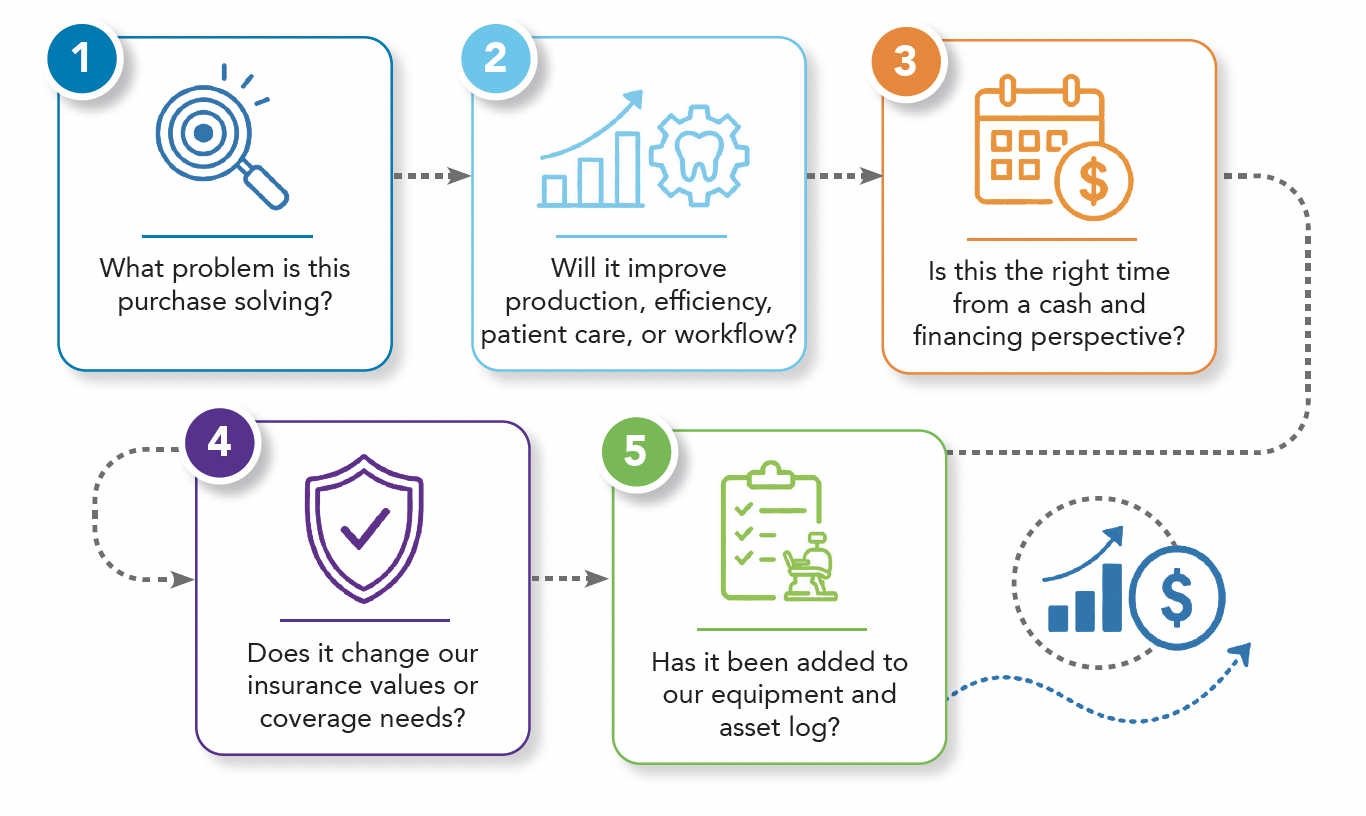
Reinvestment does not have to mean chasing the newest technology. It could involve improving scheduling systems, replacing ageing equipment before it fails, or creating more reliable processes around collections, recalls or inventory. If attracting and retaining staff is a top concern, sometimes the better best investment is the one you make in your team. That could mean new training programs and incentives such as implementing a group RRSP or offering performance bonuses.
As Dr. Sanjukta Mohanta noted at the Toronto session, a new tool or process is only useful if the team is trained, given time to use it, rewarded for adopting it, and invited into the discussion about what is working. She gave the example of Artificial Intelligence (AI) radiograph technology that was introduced by email alone, without training or follow-up. The result was predictable: few people used it. Her advice was to systemize the change, revisit it in staff meetings, ask what problems are coming up, and continue refining the process until it becomes part of how the practice operates.
The strongest reinvestment decisions are the ones that connect the practice’s numbers to the owner’s priorities.
Protect the value you're building
A practice owner’s financial decisions are not only about improving performance. They are also about protecting what the practice has already built.
That protection should evolve as the practice changes. Equipment gets added. Operatories are renovated. Technology is upgraded. Associates join. The owner’s personal and professional obligations shift. If insurance coverage is not reviewed along the way, the practice may be carrying assumptions that no longer match its actual risk.
A speaker at both panel sessions, Penelope Cenac, a Professional Insurance Advisor with CDSPI Advisory Services Inc., emphasized that under-protection often appears after the practice has completed renovations, added equipment, or increased the value of its contents but is still relying on limits that reflect an earlier version of the business.
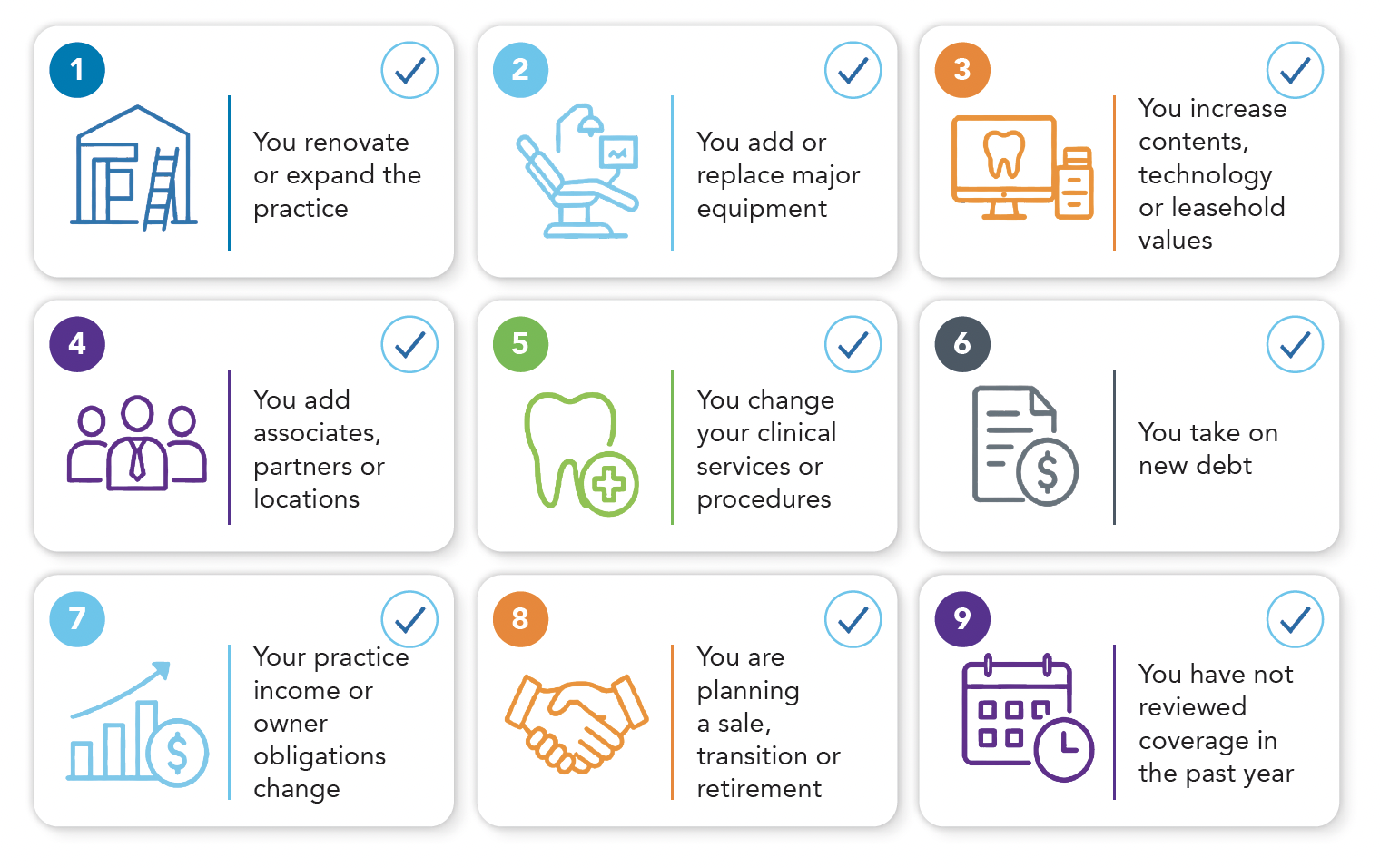
That can matter at claim time. If contents, equipment or leasehold improvements are underinsured, the owner may face out-of-pocket costs that could have been addressed through a regular review. Penelope also noted that some policies include co-insurance requirements, meaning a claim payment may be reduced if the insured value is too low compared with the replacement cost.
Protection is not limited to physical property. It also includes the practice’s ability to keep meeting obligations if the owner cannot work. Disability insurance coverage and office overhead insurance serve different purposes, but both are part of a broader continuity conversation. Disability insurance helps protect the owner’s income, while office overhead coverage can help cover eligible ongoing business expenses if a disability interrupts the owner’s ability to practice.
For associates, Penelope also highlighted a common misunderstanding: an associate may assume they are protected under the principal dentist’s office policy if the practice is temporarily shut down after an insured event. In many cases, that is not the reality. Associates may wish to consider CDSPI’s TripleGuard™ Insurance for Dental Associates which includes practice interruption coverage to help protect against lost income.
An insurance coverage review is not about assuming the worst. It is about making sure the practice has appropriate protection in place to support business continuity and peace of mind. As the value of a practice grows, the more important it becomes to confirm that a disruption would not require the owner to use cash, credit, or personal resources in ways that could disrupt their financial plan.
The goal is simple: make sure the practice you are building is also the practice you are prepared to protect.
Bring the pieces together
A practice does not become stronger because the owner tracks more numbers. It becomes stronger when those numbers lead to better decisions and outcomes.
The right dashboard can show where attention is needed. A clear cash strategy can help each dollar support a purpose. Thoughtful reinvestment can strengthen the practice. The right protection can help preserve the value being built.
Your team of professional advisors can help practice owners connect these decisions to a broader financial plan, including insurance, investments, retirement goals, and long-term practice priorities. If you want to review your current situation with an advisor at CDSPI Advisory Services Inc., simply book a meeting at a time convenient to you.
Thank you to panelists Andrea Porter and Farzad Shafieian from Scotiabank, Shaun Howe and Jordan Weinberg from MNP, practicing dentists Dr. Soumya Jain and Dr. Sanjukta Mohanta, cybersecurity expert Anne Genge, and Brian Buris, Penelope Cenac, and Shane Dewling from CDSPI Advisory Services Inc. for helping shape a broader conversation about how practice owners can make more intentional decisions about performance, cash, credit, retained earnings, reinvestment and protection.
This information is provided for general information purposes only and is not intended as personal insurance, financial or legal advice. Speak with a licensed advisor for guidance specific to your situation.
TripleGuard™ Insurance is underwritten by Zurich Insurance Company Ltd. (Canadian Branch).A full description of coverage and eligibility, including exclusions, restrictions and limitations can be found in the Policy Terms and Conditions governing the plan.