
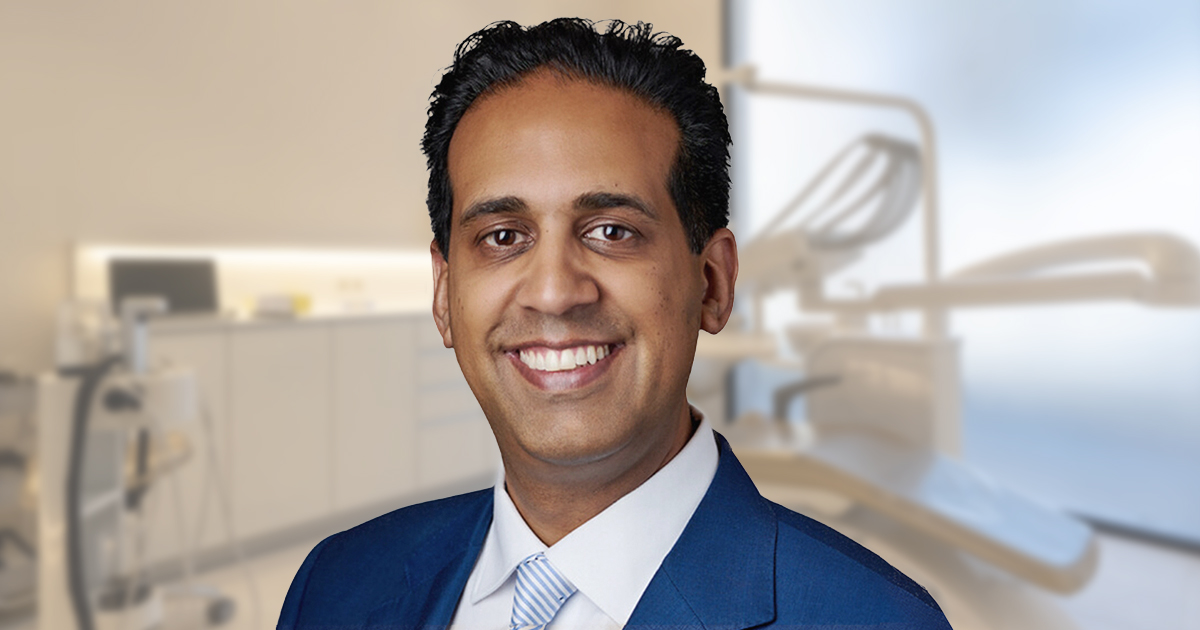
Dr. Ray Grewal has built something deliberately different—an oral surgery network grounded in partnership, mentorship and an openness to opportunity. Over the course of his career, he has grown a Vancouver-based practice from two offices to six, but the more defining story is not about scale. It is about stewardship.
Today, Dr. Grewal occupies a role that colleagues might describe as an “elder statesman.” His focus has shifted toward shaping the next generation of surgeons, creating pathways into practice, and building a culture that makes talented associates want to stay.
A Career Shaped Early
Dr. Ray Grewal’s path into oral surgery was both ambitious and pragmatic. After completing his undergraduate degree at McGill in just three years, he headed to the United States for dental school at Columbia, followed by oral surgery training at Yale. At the time, opportunities in Canada were limited, and like many of his peers, he looked south for access to top-tier programs.
“There just weren’t the same opportunities in Canada at that time,” he explains. “If you wanted that level of training, you had to go where it existed.”
The decision came with trade-offs. Training was demanding—long shifts, relentless on-call schedules—and financial support was minimal. He recalls the sacrifices his family made, particularly during a period when the Canadian dollar made U.S. tuition especially daunting.
That experience left an imprint. It shaped not only his work ethic, but his appreciation for the investment required to become a specialist—and the responsibility that comes with it.
Growth Without a Ceiling
When Dr. Ray Grewal returned to Canada, he entered practice at a time when opportunities were starting to open up. What began as a two-office operation gradually expanded, not through rigid planning but through a willingness to act decisively when the right opportunity appeared.
“You see an opportunity in a geographic area, and you think—does this make sense for patients? Does it make sense for the group?” he says. “If it does, you move on it.”
That approach held firm even during uncertainty.
“We opened offices during COVID. Most people were pulling back, but we felt there were still needs that weren’t being met.”
The result is a network of six offices—with a seventh opening soon— and each operating independently but connected through shared ownership and philosophy.
“Every office has its own personality,” he notes. “But we’re all aligned in how we practise and how we treat people.”
Underlying that expansion is a simple philosophy: don’t close the door too early.
Rather than viewing growth as a finite plan, Dr. Grewal sees it as a series of decisions—each one requiring judgment, but also a degree of openness. That mindset has allowed the practice to evolve organically, adapting to changing conditions while maintaining a consistent standard of care.
Why Group Practice Matters
Central to Dr. Grewal’s approach is a strong belief in group practice. In a field where solo ownership has long been the norm, he has intentionally built a model that emphasizes collaboration over independence.
Each of the six offices operates with a degree of autonomy, but they are united through shared ownership and constant communication among partners. The structure allows for flexibility—each location can respond to its own patient base—while ensuring that no one is operating in isolation.
For Dr. Grewal, the benefits are both practical and personal. Workloads can be distributed more evenly. Responsibilities are shared. Cases can be discussed. And the isolation that can come with solo practice is reduced. “I’ve always believed in group practice over solo,” he says. “It’s just a better way to work.”
“You’re not carrying everything yourself,” he explains. “If something comes up, you’ve got people you trust to talk it through.”
The Art of Choosing Partners
Dr. Ray Grewal is deliberate about who joins the practice—not just in terms of clinical skill, but character. Reputation matters. Compatibility matters. And often, so does instinct.
“There has to be a gut feeling,” he explains, acknowledging that even the most careful evaluation sometimes requires a leap of faith.
Once inside the partnership, expectations are clear: fairness above all. Responsibilities are shared evenly, regardless of seniority. That includes taking calls and managing the most challenging cases. The goal is not hierarchy, but balance—creating an environment where every partner feels both accountable and supported.
Recruiting the Next Generation
Where Dr. Ray Grewal’s role as an elder statesman becomes most evident is in how he approaches associates.
Dentistry, and particularly oral surgery, offers relatively few alternative career paths. For younger professionals, the choice is often between ownership and employment. Increasingly, many are opting for associateship—drawn by the stability it offers and wary of the business complexities that come with running a practice.
Dr. Grewal understands that shift. He has seen firsthand how limited business training in dental school can leave new graduates underprepared for ownership. He has also seen how economic pressures have raised the stakes.
Recruitment, in his practice, is not about filling a gap. It is about creating a pathway.
New associates are brought into an environment where expectations are high, but support is built in. Senior partners provide guidance, but the relationship is not one-directional. Younger surgeons bring new techniques, new perspectives, and new energy. The exchange is mutual.
This balance—between mentorship and openness—is what allows associates to see a future within the practice. They are not simply employees. They are potential partners.
And that, he believes, is the key to retention.
Bridging Generations
One of the more nuanced challenges in a growing practice is managing generational differences—not just among dentists, but across the entire team.
Dr. Grewal’s offices include staff members who have been with the practice for decades, a few even attaining 40 years of service. Their experience and independence are invaluable, but their expectations can differ from those of newer employees.
Younger staff may seek more structure, more feedback, and a different kind of work-life integration. Bridging that gap requires intention.
For Dr. Grewal, the solution lies in communication and respect—recognizing the strengths of each group while setting clear expectations for how they work together. It is another form of mentorship, one that extends beyond clinical roles into the broader culture of the practice.
A Voice Beyond the Clinic
Dr. Grewal’s influence is not confined to his own offices. Over the years, he has taken on leadership roles across the profession, including serving as president of the British Columbia Dental Association and the Canadian Association of Oral and Maxillofacial Surgeons, and contributing at the national level through the Canadian Dental Association and as a member of the CDSPI Advisory Panel.
These roles offer insights into policy, governance and the evolving needs of the profession.
Just as important, they reinforce a habit of listening.
Exposure to different perspectives, he notes, ultimately strengthens the practice. It is another way of staying connected—not just to colleagues, but to the direction dentistry is heading.
A Full Life
Despite the demands of his career, Dr. Ray Grewal approaches life with intensity—committing fully to whatever is in front of him.
That philosophy extends beyond the clinic. Family is central. His eight-year-old son, Mason and his wife, Sony who manages the household, anchor his day-to-day life. Travel, along with an interest in urban geography, provides both perspective and renewal.
He also makes a point of connecting with people outside dentistry, a deliberate effort to avoid the isolation that can come with professional specialization.
Looking Ahead
In reflecting on his career, Dr. Grewal is candid about the broader environment. He sees shifts in economic conditions, evolving attitudes toward work, and ongoing debates about healthcare and social policy. He has his concerns, particularly about how these forces may shape opportunities for the next generation.
But his response is consistent with the way he has built his practice: stay engaged.
For Dr. Grewal, that means recruiting carefully, mentoring intentionally, and remaining open to what comes next.
Because in the end, the success of a practice is not measured by how many offices it has, but by how many people it helps grow within it.