
This article was developed by CDSPI with risk-management guidance and claims insights supplied by Zurich Insurance Company Ltd. (Canadian Branch), the insurer for CDSPI TripleGuard™ Insurance.
Water damage in a dental practice does not always begin with a dramatic flood or burst pipe. It may start with a slow leak behind cabinetry, a failing supply line, or an overflowing HVAC condensate drain.
What often determines the severity of the loss is not the size of the initial leak, but how long it goes undetected.
Dental practices rely on extensive plumbing and water-dependent systems to support patient care, sterilization, HVAC, and daily operations. That creates many potential leak points, including some that may be hidden behind walls, under cabinets, or above ceiling tiles. Even a relatively small amount of water can spread into flooring, drywall, cabinetry, electrical systems, and clinical equipment before anyone realizes there is a problem.
Why dental practices can be especially vulnerable
Common sources of water loss in dental practices include:
dental chair supply lines and handpiece waterlines
suction systems
sterilizers, autoclaves, and instrument washers
water heaters and booster pumps
HVAC condensate lines and drain pans
plumbing concealed behind cabinetry, walls, and ceilings
leaks originating in another unit within a shared building
Zurich’s claims insights for the CDSPI program indicate that almost 20% of property claims are water related. The largest losses are often associated with flooding or leaks from other units, while other common causes include bursts in water lines connected to dental equipment and frozen pipes.
A leak can be particularly damaging when it begins outside clinic hours. Water that escapes late on a Friday may continue spreading through the weekend before it is discovered on Monday morning. By then, the practice may be dealing with damaged flooring, wet drywall, mold-prevention work, equipment inspections, and a partial or full shutdown.
Early detection can help limit the damage
Because many leaks develop out of sight, routine inspections are important. Practice teams can watch for early warning signs such as:
moisture or staining under sinks and around equipment
discoloured ceiling tiles
musty odours
unexplained humidity
pooling water
corrosion around fittings
changes in water pressure
Visible hoses, fittings, and supply lines should also be inspected regularly and replaced before they fail. Zurich’s guidance suggests considering braided hoses and ensuring that equipment using water has a clearly labelled, accessible quarter-turn shut-off valve.
Leak-detection technology can provide another layer of protection. Options range from point sensors placed near sinks or sterilizers to rope sensors, flow-monitoring systems, and automatic shut-off valves.
When evaluating a system, practices may want to consider:
whether it can detect both small drips and sudden failures
whether it covers concealed or high-risk spaces
how quickly alerts are sent
whether alerts escalates if the first contact does not respond
whether the system has battery backup
whether it relies on office Wi-Fi
whether it can automatically shut off water
A sensor is only useful when someone is prepared to act on the alert. Zurich notes that response protocols and escalation procedures can be just as important as the equipment itself.
Plan for after-hours incidents
A written response plan can help the team act quickly when a leak is discovered or an alarm is triggered. That plan should identify:
who receives alerts
who is responsible for responding after hours
where shut-off valves are located
how the landlord or property manager can be reached
who can provide emergency building access
which restoration company to contact
how staff and patients will be informed if the clinic is affected
It may also be useful to establish a relationship with a qualified restoration company before an emergency occurs. Zurich’s guidance recommends confirming that the company offers 24/7 service, has appropriate equipment available, and has experience working in healthcare environments.
Having those details in place can reduce delays at a time when every hour matters.
What to do when a water loss occurs
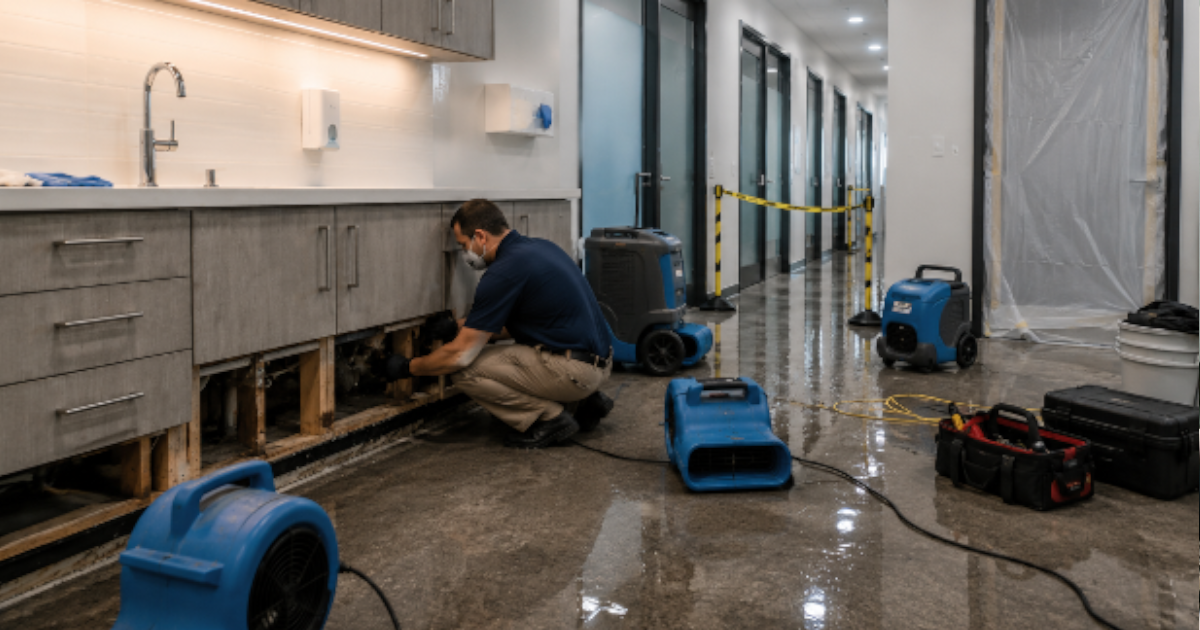
Once a leak is discovered, the immediate priority is to stop the flow of water where it is safe to do so and begin mitigation quickly. Practical steps may include:
Shut off the affected water supply.
Contact the landlord or property manager if the source may be outside the practice.
Protect people from electrical or structural hazards.
Contact an emergency restoration provider.
Photograph and document the affected areas.
Record when the leak was discovered and what actions were taken.
Notify the insurance provider promptly.
Keep records of repairs, inspections, alerts, and contractor activity.
Documentation can help establish the cause of the loss, the timing of the response, and the steps taken to reduce further damage.
Insurers may also consider whether the loss was sudden and accidental or developed over a longer period, as well as how quickly the water was shut off and drying began.
Think beyond the initial repair
A water loss can affect much more than flooring or drywall. Before a practice reopens, it may need:
drying and remediation
mold-prevention measures
electrical inspections
equipment testing
replacement cabinetry or flooring
infection-control review
contractor coordination
approval for safe re-occupancy
These steps can extend the interruption even after the source of the leak has been repaired.
Zurich’s claims guidance notes that business interruption costs can sometimes exceed the cost of the initial physical repairs, particularly when equipment inspections, safety concerns, or delayed re-occupancy are involved.
Reduce risk and review your protection
No dental practice can eliminate every water risk. A leak may begin in another unit, a concealed pipe may fail, or a component may break without warning.
However, regular inspections, leak-detection systems, accessible shut-off valves, clear response procedures, and early restoration support may help reduce the extent of the damage and the length of the interruption.
It is also worth considering whether your current practice protection and interruption coverage reflects the true replacement value of your equipment, leasehold improvements, technology, and operations you rely on today. A discussion with an insurance advisor at CDSPI Advisory Services Inc. can help practice owners ensure their coverage is keeping pace with their practice.
TripleGuard™ Insurance is underwritten by Zurich Insurance Company Ltd. (Canadian Branch). A full description of coverage and eligibility, including exclusions, restrictions, and limitations, can be found in the Policy Terms and Conditions governing the plan.