
This article was developed by CDSPI with risk-management guidance and claims insights supplied by Zurich Insurance Company Ltd. (Canadian Branch), the insurer for CDSPI TripleGuard™ Insurance.
A wet entrance, an exposed cord, or a piece of equipment left in a walkway may seem like a minor concern. But in a busy dental office, these everyday hazards can lead to injuries, liability claims, and disruption for patients and the practice.
Patients, family members, delivery workers, and other visitors may be unfamiliar with the office layout. They may also be distracted, moving carefully after treatment, or carrying personal items.
Consistent housekeeping, clear walkways, regular inspections, and a documented response procedure can help reduce the risk.
Why dental offices can be vulnerable
Dental practices have several characteristics that can contribute to slips, trips, and falls:
water used in treatment and sterilization areas
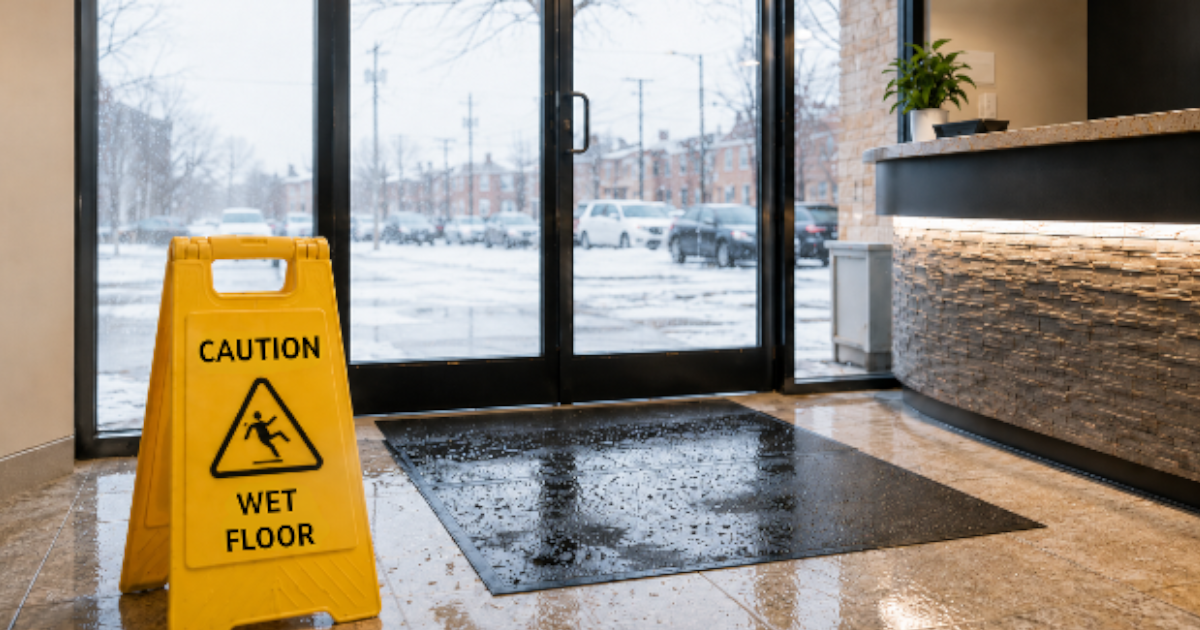
snow, ice, and rain tracked through entrances
tile, vinyl, carpet, and other flooring transitions
cords and hoses associated with portable equipment
cleaning during or between appointments
busy reception areas and corridors
washrooms and storage spaces with limited visibility
patients whose mobility may be temporarily affected
Zurich identifies slip, trip, and fall incidents as a common source of third-party injury claims in dental offices.
Claims insights supplied by Zurich for the CDSPI program indicate that slip, trip, and fall incidents accounted for approximately 20% of liability claims reviewed.
Use regular inspections and documentation
A consistent walk-through process can help identify hazards before an incident occurs. The practice may want to assign responsibility for inspections and document:
the date and time
the areas checked
weather conditions where relevant
hazards identified
corrective actions taken
the staff member completing the review
Documentation can demonstrate that the practice had a reasonable process in place and responded when concerns were identified.
Inspections may need to happen more frequently during snow, rain, cleaning, maintenance work, or periods of higher foot traffic.
Start with flooring and housekeeping
Having a clear plan for staff on how to monitor and maintain floors, walkways, and entrance areas can help reduce the risk of slips, trips, and falls. Many incidents can be prevented through routine attention and simple preventive measures, such as:
cleaning spills immediately
drying floors thoroughly
using non-slip mats in higher-risk areas
securing rugs and mats so they do not curl or shift
replacing damaged mats
avoiding overly glossy or slippery floor finishes
repairing uneven flooring or raised transitions
keeping aisles and exits cleared
Where a third-party contractor supplies or maintains entrance mats, it can be helpful to establish a shared understanding of the maintenance and inspection practices. Knowing how often mats are replaced or cleaned, and who is responsible for monitoring their condition, can help ensure these areas remain safe for staff and visitors.
Pay particular attention to entrances
Canadian weather can create recurring hazards at practice entrances.
Snow and ice may accumulate outside, while melting snow and rainwater can create pooling inside. Freeze-thaw conditions can make sidewalks, stairs, and parking areas especially difficult to manage. Seasonal controls may include:
absorbent entrance mats
more frequent inspections during wet weather
prompt snow and ice removal
clear responsibility for exterior maintenance
caution signage when conditions are temporarily hazardous
drying or replacing saturated mats
A mat that is too small, soaked through, curled at the edges, or allowed to shift may create its own hazard.
Keep cords, hoses, and equipment out of walkways
Zurich’s claims insights note that exposed electrical cords and extension cables are common tripping hazards within dental offices. Portable equipment can create temporary risks when it is not returned to storage promptly. Practice teams should have a plan to:
keep cords and hoses away from corridors
route necessary cords along walls where possible
avoid running cords across walking paths
store portable devices immediately after use
limit temporary extension cords
keep supply carts and equipment out of doorways
maintain clear access to exits
These risks can be easy to overlook because they may appear only briefly during a busy day.
Maintain good lighting and visibility
Poor lighting can make even a small flooring change or obstruction harder to see.
Practices should maintain adequate lighting in:
corridors
washrooms
storage areas
stairways
entrances
parking and exterior access areas
Burnt-out bulbs should be replaced promptly, and staff should report dark areas or visibility concerns.
Signs, furniture, boxes, and equipment should not block sightlines or access routes.
What to do after a fall
Even with good prevention measures, incidents can still happen. A calm and consistent response can help protect the injured person and preserve accurate information about what occurred.
1. ASSIST THE PERSON
Provide immediate assistance and assess whether medical attention is needed. Call emergency services if there is any concern about serious injury. Do not move the person unless necessary for their immediate safety.
2. SECURE THE AREA
Prevent another incident by isolating the area once it is safe to do so. This may involve:
- removing an obstruction
- cleaning a spill
- blocking access
- adding warning signage
- arranging urgent repairs
Where possible, document the original condition before it is altered.
3. DOCUMENT THE INCIDENT
Complete an incident report as soon as possible. Record:
- the date and time
- the exact location
- the conditions at the time
- the injured person’s name and contact information
- names and contact information for witnesses
- what assistance was provided
- what corrective action was taken
Photographs of the area may also be useful, provided they can be taken safely and respectfully.
4. AVOID SPECULATION OR ADMITTING FAULT
Staff should be courteous and supportive, but should not speculate about the cause or make statements that could be interpreted as accepting liability.
Avoid remarks such as:
- “This happens all the time.”
- “We should have fixed that.”
- “It was definitely our fault.”
The priority is to assist the person and record the facts accurately.
5. REPORT THE INCIDENT
Notify office management and report the incident to the insurance provider according to established procedures.
Keep all reports, photographs, witness information, and related records together.
5. REVIEW WHAT HAPPENED
After the immediate response, the practice should examine what contributed to the incident. Questions may include:
- Was there a housekeeping issue?
- Was a mat missing, saturated, or unsecured?
- Was equipment left in a walkway?
- Was lighting adequate?
- Were inspections being completed?
- Did staff know how to respond?
- Does the procedure need to be updated?
Any lessons learned should be shared with the team so similar incidents are less likely to occur.
Make prevention part of daily practice
Slip, trip, and fall prevention is not a one-time project. It depends on routine awareness and clear responsibility. A brief inspection, a dry entrance, or a cord moved out of a walkway may prevent an injury and a claim.
It is also worth reviewing whether current practice insurance reflects the liability risks associated with the way the office operates today. An Insurance Advisor from CDSPI Advisory Service Inc. can help practice owners and associates review their TripleGuard Insurance coverage and discuss the protection available for their specific practice situation.
This article is provided for general risk-management information only and does not constitute legal, insurance, or professional advice.
TripleGuard™ Insurance is underwritten by Zurich Insurance Company Ltd. (Canadian Branch). A full description of coverage and eligibility, including exclusions, restrictions, and limitations, can be found in the Policy Terms and Conditions governing the plan.